My Personal AI PolicyLast Updated: November 18, 2026
It seems these days that more and more people are using Large Language Models (LLMs) to generate content, and a few people have asked me about how I use them in my own work. This document outlines the specific ways I use AI on this blog and in my work more broadly.
AI-generated content
Let’s start with what I think is the most important thing: every word you read on this blog was written by me. The same is true for my newsletter and for my social media accounts(opens in new tab).
I don’t use AI at all when it comes to the content on this blog. I don’t generate an outline or rough draft with AI, nor do I use it to help me come up with ideas for blog posts. I don’t feed my posts into an LLM to ask it for feedback. It’s important to me that this blog is from me, unfiltered and undiluted by generative AI.
The same is generally true for other types of media. You won’t find any AI-generated images or videos on this blog. There is a single exception to this: I used AI to generate the OpenGraph image (the preview image shown on social media networks) for my blog post, The Post-Developer Era. This blog post was about AI, so I thought it’d be cheeky to use AI to make the OG image.
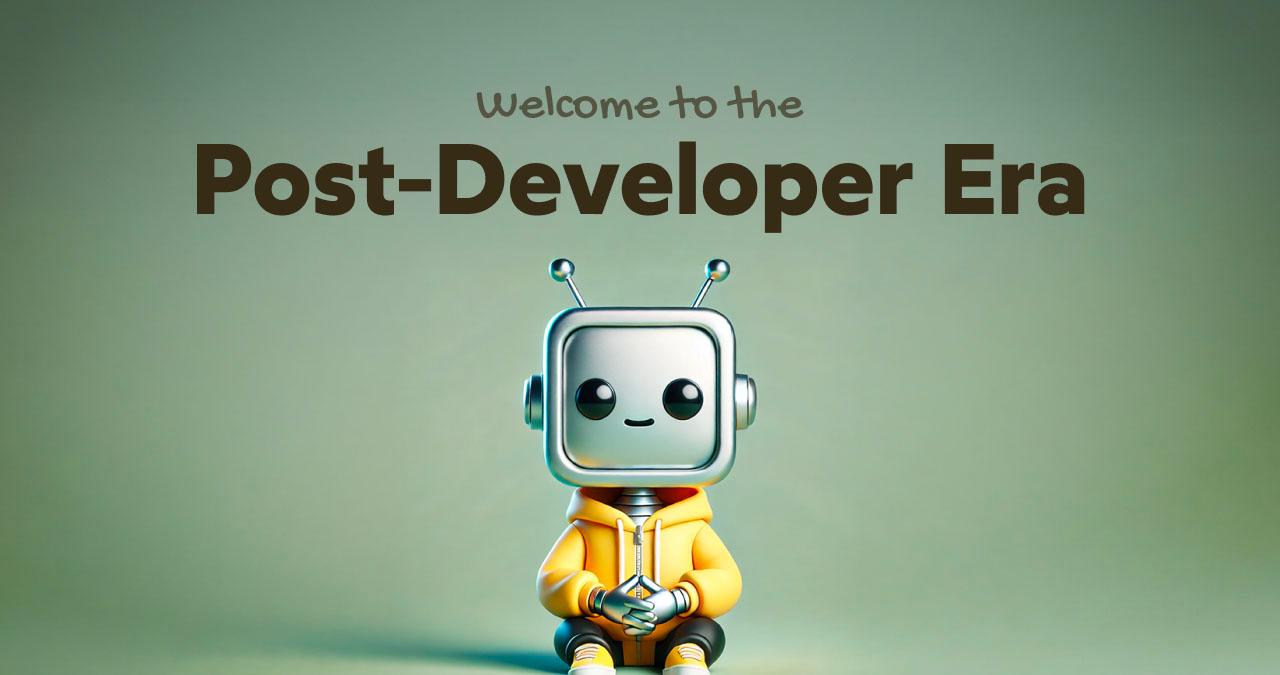
But yeah, with this singular exception, every bit of content you see on this website was created by me. AI hasn’t really changed my writing process at all. I’ve never used AI in my writing and I don’t plan on starting.
AI-generated code
When it comes to code, things get a bit murkier. I do use tools like Claude Code to expedite the process or writing code, especially when it comes to generic/repetitive tasks.
For example, I recently created a browser-support widget, used in my recent blog post, The Future of CSS:




More info on caniuse(opens in new tab)
For utility components like this, I do find myself reaching for agentic coding workflows to quickly produce something broadly in the right shape for what I need.
Importantly, the design is still mine. I started with a pen-and-paper sketch of the design. When I delegate tasks to an agent, I usually specify that it should produce something unstyled beyond the basic layout. I still write most of the cosmetic CSS by hand, since in my mind, this is part of the “content”.
AI usage in my courses
I offer several interactive online courses: Whimsical Animations(opens in new tab), The Joy of React(opens in new tab), and CSS for JavaScript Developers(opens in new tab). Like with my blog, every word in every lesson was written by me. I don’t use AI at all when it comes to the content.
There is one small exception: the videos in my courses have English-language captions, and the first draft of the captions is generated by AI. This is done automatically by Vimeo, my video hosting platform. Those captions are then edited by a human (either myself or a contractor I’ve been working with for years) to fix any mistakes and improve the quality of the captions.
In my mind, this is a reasonable exception since the captions are a transcription of what I’m saying in the videos, and the videos themselves are produced entirely without AI. Like with my blog posts, I don’t use AI for video scripts, not even for outlines or rough drafts.
Conclusion
At this point, I receive several emails a week which are clearly generated by AI, and honestly, it really bugs me. I find it borderline offensive. 😅
AI is a new technology, and like with all new technologies, it’ll take us a while to figure out what’s acceptable and what’s not. I’m really hoping we don’t normalize AI-generated communication. Speaking directly with other people is one of the great joys of being human, we shouldn’t be trying to delegate it to machines.
I don’t want to live in a world where we’re all using AI to encode and decode messages to each other. I think we need to take a principled stand here, and so here’s what I can promise you: if I ever email you or message you on social media, you can trust that I wrote each word myself. And the same is true for any content I produce.